Posts by maryvilleestateplanning
Is a Power of Attorney Better Than an Executor? Understanding the Difference for Tennessee Families
When it comes to planning ahead for your loved ones, one of the most common questions we hear is: “Is a Power of Attorney better than an Executor?” The truth is, they serve very different purposes—yet both are crucial in a comprehensive estate plan. Understanding their roles can protect your family from confusion, delay, and unintended hardship. At Maryville Estate Planning, we believe knowledge is empowerment. Let’s clarify these roles so you can feel confident about your decisions.
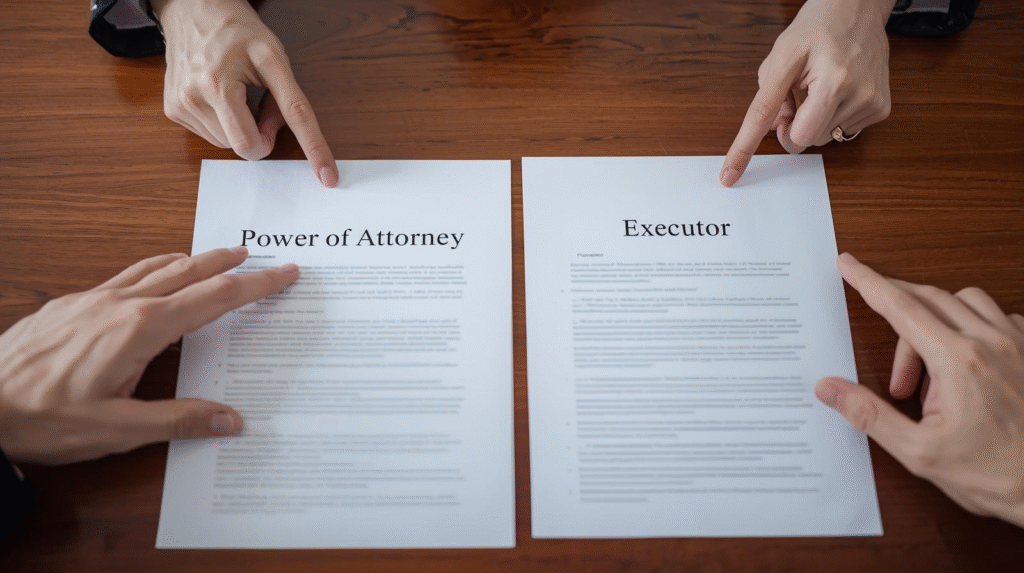
The Role of a Power of Attorney
A Power of Attorney (POA) is someone you appoint to make decisions on your behalf during your lifetime if you are unable to act for yourself. In Tennessee, this could include:
- Financial decisions: managing bank accounts, paying bills, handling taxes, or overseeing investments.
- Healthcare decisions: choosing medical treatments, authorizing care, or speaking with doctors if you cannot.
Think of your POA as your voice while you are still alive but unable to manage things directly. Without this document, your loved ones may have to go to court to be appointed as your conservator—an expensive and stressful process.
The Role of an Executor
An Executor, also called a Personal Representative in Tennessee, steps in after you pass away. Their responsibilities include:
- Filing your Will with the probate court.
- Gathering and valuing your assets.
- Paying debts, taxes, and expenses.
- Distributing what remains to your heirs and beneficiaries.
Your Executor’s job is to ensure your wishes are honored and your estate is handled properly under Tennessee law.
So, Is a Power of Attorney Better Than an Executor?
This is the heart of the question. The answer is neither role is “better”—they are simply different.
- A Power of Attorney protects you during life.
- An Executor manages things after death.
You need both if you want seamless protection across your lifetime and beyond. Without a POA, your family may struggle to help you if you become incapacitated. Without an Executor, your estate may face delays or disputes after your passing.
How They Work Together
Here’s the simplest way to think about it:
- Power of Attorney = lifetime support
- Executor = legacy support
By choosing the right people for these roles, you create continuity of care. Your POA safeguards your well-being and financial stability during life, while your Executor carries your plans forward after death.
Why Tennessee Families Need Both
Tennessee’s probate rules can be complex, and every family situation is unique. Having both documents ensures:
- No court delays in appointing someone to act for you.
- Clear authority for loved ones in emergencies.
- Protection of assets from mismanagement.
- Peace of mind knowing your wishes will be honored.
Final Thoughts
If you’ve been wondering, “Is a Power of Attorney better than an Executor?”, the real takeaway is that you don’t have to choose one over the other. Instead, you need both—carefully selected, clearly defined, and legally enforceable.
At Maryville Estate Planning, we help Tennessee families create estate plans that stand strong in life’s most difficult moments.
📞 Call us today at 865.935.9769 to schedule a consultation and make sure your plan truly protects you and your loved ones.

Nicole PavlikNicole is an estate planning attorney and founder of Maryville Estate Planning in Maryville, Tennessee. She helps individuals, families, and business owners create wills, trusts, powers of attorney, and business planning strategies designed to protect their assets and provide clarity for the future.
Nicole writes about estate planning, trusts, advance directives, and business planning to help individuals better understand their legal options and make informed decisions.
AI Estate Planning: Why Tennessee Families Should Think Twice
Artificial intelligence (AI) is everywhere. It writes emails, answers questions, and even drafts homework. That has many people asking: Can AI estate planning replace an attorney?
The truth is simple. Drafting a will or trust is not the same as typing an email. Estate planning is about law, family, and legacy. Here’s why Tennessee families should be cautious about using AI tools for something so important.

What’s Missing in AI Estate Planning
AI is fast and inexpensive. However, creating a valid estate plan in Tennessee involves much more than filling in blanks. Here’s where AI estate planning falls short.
1. AI Estate Planning Can’t Understand Your Family
No two families are the same. Some have blended households, children with special needs, or small businesses. Others want to protect property from creditors. AI creates boilerplate text. It does not design a strategy tailored to your family’s goals.
2. AI Only Produces What You Ask For
AI depends on prompts. If you do not know what issues to raise, you will not get the right answers. A layperson will not know to ask about guardianship, succession planning, or blended-family concerns. The result is a plan that looks fine on paper but leaves gaps when your family needs protection.
3. AI Estate Planning Offers No Ongoing Support
Estate planning is a living process. Laws change. Assets grow. Families evolve. An attorney updates your plan to keep it relevant. AI gives you a static document — and if it fails, there is no one to call for help.
Why Local Guidance Matters More Than AI
Here in Maryville and across Blount County, families often own farms, small businesses, or property passed down for generations. These are not just assets. They are legacies.
AI estate planning tools cannot handle the nuances of Tennessee probate, family-owned land, or multi-generational property. Only a local attorney can build a plan that respects your values and protects what matters most.
Common Misconceptions About AI Wills and Trusts
Many people assume AI can replace an attorney because it is “good with language.” But estate planning is not about polished sentences. It is about building a legal framework that holds up in real life.
Is AI Ever Useful in Estate Planning?
AI can help brainstorm or organize your thoughts. It may even create a rough draft of notes. But when it comes to documents that must stand in court, professional judgment is irreplaceable.
The Bottom Line
AI is powerful, but estate planning is too important to leave to an algorithm. If you want a plan that is valid, personal, and built to last, work with a professional.
📞 Call Maryville Estate Planning at (865) 935-9769 to create a roadmap — not just a document — that your family can rely on, no matter what the future holds.
Nicole PavlikNicole is an estate planning attorney and founder of Maryville Estate Planning in Maryville, Tennessee. She helps individuals, families, and business owners create wills, trusts, powers of attorney, and business planning strategies designed to protect their assets and provide clarity for the future.
Nicole writes about estate planning, trusts, advance directives, and business planning to help individuals better understand their legal options and make informed decisions.
How Do I Hire an Estate Lawyer? What to Know Before You Decide
Planning for the future isn’t just about documents—it’s about protecting the people you love and ensuring your wishes are honored. One of the most important questions you may ask yourself is: “How do I hire an estate lawyer who is the right fit for me?”At Maryville Estate Planning, we believe that hiring the right attorney can bring peace of mind and clarity. Here’s what you need to know before making your decision.

What Does an Estate Lawyer Do?
An estate lawyer, often called an estate planning attorney, helps you prepare for the management and transfer of your assets. But their role goes beyond simply writing a Will. They may:
- Draft Wills and Living Trusts to direct how your property is handled.
- Create Powers of Attorney and Healthcare Directives to protect you if you can’t make decisions.
- Develop tax strategies to reduce estate costs.
- Set up guardianship arrangements for minor children.
- Guide families through probate or trust administration.
In short, an estate lawyer helps ensure your wishes are respected during your lifetime and after.
How Do I Hire an Estate Lawyer? 5 Key Steps
The first step is clarifying what level of planning you need. Do you want a simple Will, or a more comprehensive plan involving trusts and tax strategies? The more complex your circumstances, the more experienced your attorney should be.
Here are five steps to help you choose wisely:
- Do Your Research – Focus on attorneys who specialize in estate planning, not just general law.
- Check Credentials – Confirm they’re licensed and in good standing with the Tennessee Bar Association.
- Schedule a Consultation – Many estate lawyers offer an affordable or complimentary first meeting.
- Ask About Experience – Find out how long they’ve been practicing and whether they’ve handled cases like yours.
- Review the Fee Structure – Some attorneys charge a flat fee, while others bill hourly. Transparency matters.
The right lawyer will combine technical expertise with the ability to explain complex concepts in simple terms.
Questions to Ask at Your First Meeting
The consultation is your chance to evaluate whether the lawyer is a good match. Don’t be afraid to ask questions that go deeper than surface-level details:
- Will a Will or a Trust be better for my situation?
- What happens if I need to update my plan in the future?
- Can you guide my family through probate if it becomes necessary?
- Will I primarily work with you or a team?
- How do you stay current on tax law and estate law changes?
These questions reveal not only the attorney’s expertise but also their approach to client care.
Why Legal Advice Matters for Everyone
Estate planning isn’t just for the wealthy or elderly—it’s for anyone who wants control over what happens to their property, children, and healthcare decisions.
Hiring an estate lawyer ensures:
- Your wishes are carried out without confusion.
- Someone you trust can make decisions for you if needed.
- Your family avoids unnecessary stress, delay, and conflict.
Solid legal guidance can spare your loved ones from hardship during already difficult times.
Final Thoughts: Making the Right Choice
If you’ve been asking, “How do I hire an estate lawyer?” the answer is preparation: research, thoughtful questions, and choosing someone who understands estate planning is about people—not just paperwork.
At Maryville Estate Planning, we guide clients with clarity, compassion, and trusted experience. Don’t wait for a crisis to make these decisions. Take action now to protect yourself and your loved ones.
📞 Call us at 865.935.9769 to schedule a consultation and take the first step toward securing your legacy.
Nicole PavlikNicole is an estate planning attorney and founder of Maryville Estate Planning in Maryville, Tennessee. She helps individuals, families, and business owners create wills, trusts, powers of attorney, and business planning strategies designed to protect their assets and provide clarity for the future.
Nicole writes about estate planning, trusts, advance directives, and business planning to help individuals better understand their legal options and make informed decisions.
Operating Agreements and Bylaws: What to Know Before You Start Your Business
When starting a business, you need more than a great idea—you need the right legal foundation. Two documents are essential to that foundation: Operating Agreements and Bylaws. Though often mentioned together, they serve very different purposes depending on your business structure.
Understanding how these documents work—and why they matter—can protect your company from disputes, provide clarity for members or shareholders, and create long-term stability.
At Maryville Estate Planning, we guide Tennessee business owners through these critical decisions with clarity and care. Let’s break down the differences between Operating Agreements and Bylaws and why both are vital.

Business Structure Agreements: The Basics
Starting a business isn’t just about paperwork—it’s about establishing trust, accountability, and a roadmap for how your company will operate. That’s where Operating Agreements and Bylaws come in.
- Operating Agreements apply to Limited Liability Companies (LLCs).
- Bylaws apply to Corporations.
Both documents define rights, responsibilities, and procedures, but each is tailored to its specific entity type.
What Is an Operating Agreement?
An Operating Agreement is the guiding document for an LLC. While Tennessee law doesn’t always require LLCs to have one, creating an Operating Agreement is highly recommended. Without it, your business may fall under default state rules that don’t reflect your goals.
Key provisions often include:
- Ownership structure and member contributions.
- Voting rights and decision-making procedures.
- Profit and loss allocation.
- Management roles (member-managed or manager-managed).
- Procedures for adding or removing members.
- Plans for dissolving the company if needed.
Think of an Operating Agreement as a customized contract among members—it creates expectations, reduces conflicts, and allows flexibility for growth.
What Are Bylaws?
Bylaws are the framework for how a corporation is governed and operated. Unlike Operating Agreements, bylaws are typically required under state law once your Articles of Incorporation are filed.
Corporate bylaws generally cover:
- Roles and responsibilities of officers and directors.
- Procedures for shareholder and board meetings.
- Voting rights and processes.
- Rules for issuing stock.
- Steps for amending bylaws in the future.
Bylaws bring formality and structure, ensuring that corporations operate consistently and in compliance with state regulations. They also reassure investors and regulators that your company is well-organized.
Operating Agreements and Bylaws: Key Differences
The biggest difference comes down to entity type:
- Operating Agreements are for LLCs.
- Bylaws are for Corporations.
But other distinctions matter too:
- Legal Requirements: Bylaws are usually required; Operating Agreements may not be.
- Flexibility: LLC Operating Agreements allow more customization, while bylaws are more formal and rigid.
- Focus: Operating Agreements concentrate on ownership, internal relationships, and profit-sharing. Bylaws outline governance, decision-making, and compliance.
Both documents provide structure—but in different ways. Together, they help ensure your business runs smoothly and lawfully.
Why Operating Agreements and Bylaws Matter
Without formal agreements in place, your business is vulnerable to disputes, mismanagement, and even legal penalties. These documents:
- Clarify roles and responsibilities.
- Prevent misunderstandings among members or shareholders.
- Provide legitimacy when working with banks, investors, or regulators.
- Protect your company’s future and reputation.
In short, Operating Agreements and Bylaws aren’t just paperwork—they’re the backbone of business stability.
Get Help with Operating Agreements and Bylaws
Drafting these documents correctly is too important to leave to chance. A well-crafted agreement provides clarity today and protection tomorrow.
At Maryville Estate Planning, we work with entrepreneurs and business owners across Tennessee to prepare customized Operating Agreements and Bylaws that fit their goals. Whether you’re launching a startup or restructuring an established company, we can guide you every step of the way.
📞 Call us at 865.935.9769 to schedule a consultation and start building a stronger foundation for your business.
Nicole PavlikNicole is an estate planning attorney and founder of Maryville Estate Planning in Maryville, Tennessee. She helps individuals, families, and business owners create wills, trusts, powers of attorney, and business planning strategies designed to protect their assets and provide clarity for the future.
Nicole writes about estate planning, trusts, advance directives, and business planning to help individuals better understand their legal options and make informed decisions.
Estate Planning Tips for New Parents in Maryville, Tennessee
Becoming a parent is one of life’s most joyful and transformative milestones. Alongside the sleepless nights, first smiles, and new routines, there’s another responsibility that often gets overlooked: planning for your family’s future security. While it may not feel urgent, creating an estate plan early ensures that your child is cared for and protected, no matter what life brings. In this article, we’ll share essential estate planning tips for new parents in Tennessee — practical steps you can take to build a solid foundation of peace of mind for your family.

Create or Update Your Will
A Will is the cornerstone of every estate plan, and for new parents, it carries special weight. Through your Will, you can:
- Appoint a Guardian: Choose a trusted individual who will care for your children if you cannot. Without this step, Tennessee courts decide, which may not reflect your wishes.
- Direct Asset Distribution: Outline clearly how your assets should be distributed to support your child’s financial future.
Establish a Trust
A Revocable Living Trust allows you to protect and manage assets for your children with greater flexibility than a Will alone. Trusts ensure that:
- Assets are managed responsibly until children reach the age you specify.
- Property can be transferred without the delays of probate.
- Potential estate taxes are minimized, and assets are shielded from creditors.
Review Beneficiaries
It’s easy to forget about beneficiary designations, but they control who inherits certain accounts. Review and update the beneficiaries on:
- Life insurance policies
- Retirement accounts
- Other payable-on-death accounts
This ensures your assets pass directly to your loved ones without unnecessary court involvement.
Put Health Care Directives in Place
Estate planning isn’t only about finances — it’s also about medical care. Health care directives give your family clarity during difficult moments:
- Living Will: Document your medical treatment preferences if you’re unable to communicate.
- Durable Power of Attorney for Health Care: Appoint a trusted person to make health care decisions on your behalf.
Plan for Financial Security
New parents naturally think about protecting their child’s future. Estate planning allows you to put that protection in writing:
- Life Insurance: Provides financial support for your family if something happens to you.
- College Savings: Consider a 529 plan or other education savings account to prepare for future tuition costs.
Document Your Wishes
Go beyond the legal documents by writing a Letter of Intent. While not legally binding, it provides guidance for guardians and trustees about how you wish your child to be raised, your values, and hopes for their future.
Work with an Estate Planning Attorney
Estate planning for new parents can be complex, especially when it comes to guardianship, trusts, and Tennessee-specific laws. An experienced estate planning attorney can:
- Create a plan tailored to your family’s needs.
- Ensure every document complies with Tennessee law.
- Provide peace of mind that your child’s future is secure.
Schedule a Consultation
At Maryville Estate Planning, we understand the unique concerns of new parents. Our mission is to guide families through estate planning with compassion and clarity, so you can focus on what matters most — enjoying life with your new little one.
📞 Call us today at 865.935.9769 to schedule your consultation and take the first step toward securing your family’s future.
Nicole PavlikNicole is an estate planning attorney and founder of Maryville Estate Planning in Maryville, Tennessee. She helps individuals, families, and business owners create wills, trusts, powers of attorney, and business planning strategies designed to protect their assets and provide clarity for the future.
Nicole writes about estate planning, trusts, advance directives, and business planning to help individuals better understand their legal options and make informed decisions.
Easy Estate Planning in 5 Steps
Most people know they should create an estate plan, but many put it off. Why? It feels complicated, overwhelming, and time-consuming. The good news is, estate planning doesn’t have to be intimidating. With the right guidance, it can be easy estate planning — a clear, step-by-step process that gives you peace of mind while protecting your loved ones.
At Maryville Estate Planning in Maryville, Tennessee, we believe that planning for the future should be straightforward and stress-free. That’s why we’ve designed an approach that breaks the process into five manageable steps.

Step 1: Review Fees with Transparency
We provide flat-fee estate planning services, so you know exactly what to expect from the start. There are no hidden surprises, and payment is handled at the initial session for simplicity and clarity.
Step 2: Schedule Your Planning Session
Once you decide to move forward, you’ll schedule a 45-minute consultation, which can be held virtually or by phone for your convenience. Before the meeting, you’ll complete a short intake worksheet that gathers key details about your family, assets, and goals — similar to a “new patient” form at a doctor’s office.
Step 3: Complete the Intake Worksheet & Meet with Us
During your session, we’ll review your worksheet, answer questions, and outline which documents make sense for your situation. The goal is to make the process understandable and approachable, not overwhelming.
Step 4: Drafting Your Estate Plan
Within about two weeks, you’ll receive draft documents for review. These may include a Will, Trust, Powers of Attorney, and healthcare directives. We also provide a clear explanation of each document so you know exactly what you’re signing and why it matters.
Step 5: Signing & Finalizing Your Plan
The last step is to sign your completed documents. Our office provides notary and witness support, and you’ll leave with your originals in hand. We also keep a digital copy for your records. Just like that, your easy estate planning process is complete — giving you and your family the peace of mind that comes with preparation.
Why This Matters
An estate plan is more than documents — it’s a gift to your family. By planning ahead, you:
- Protect your loved ones from confusion or conflict.
- Ensure assets pass smoothly to the right people.
- Provide clear instructions if you’re ever unable to make decisions for yourself.
At Maryville Estate Planning, we make estate planning approachable, compassionate, and tailored to your needs.
Schedule a Consultation Today
Ready to experience easy estate planning in Tennessee? Call us at 865.935.9769 to schedule your consultation. Let’s simplify the process so you can focus on what matters most: enjoying life with peace of mind.
Nicole PavlikNicole is an estate planning attorney and founder of Maryville Estate Planning in Maryville, Tennessee. She helps individuals, families, and business owners create wills, trusts, powers of attorney, and business planning strategies designed to protect their assets and provide clarity for the future.
Nicole writes about estate planning, trusts, advance directives, and business planning to help individuals better understand their legal options and make informed decisions.
Back to School: Why College Students in Tennessee Need a Power of Attorney
As Maryville families prepare for back-to-school season, one crucial step often gets overlooked: creating a Power of Attorney for college students. Once your child turns 18, you no longer have automatic authority to help in an emergency.
Amid all the hustle, one important item often gets overlooked: estate planning documents for your newly adult child.

Why Parents Lose Authority at 18
In Tennessee, the law is clear. Once your child turns 18, they are legally an adult. That means your authority as a parent changes overnight.
- Medical privacy laws (HIPAA) prevent doctors from sharing your child’s health details with you.
- Banks and financial institutions will not give you access to accounts.
- Housing or lease issues fall on your child, even if you are paying the bills.
As a result, if your child is in an accident or becomes seriously ill, you may not be able to help. Without the right documents, parents can find themselves locked out in critical moments.
There are three key documents every family should consider. Together, they give parents the ability to step in if needed.
1. Durable Power of Attorney
This document allows your child to give you authority to help with financial matters. For example, you could handle bank accounts, deal with landlords, or sign important forms if they cannot.
2. Health Care Power of Attorney
This form authorizes you to make medical decisions if your child is incapacitated. Most importantly, it ensures that doctors can consult you during an emergency.
3. HIPAA Authorization
Even when your child can make their own decisions, a HIPAA release lets doctors share information with you. In short, it gives you access to updates when you need them most.
A Local Perspective
Maryville may feel like a small town. However, our students often head to UT Knoxville, Pellissippi State, Maryville College, or schools across the country. Emergencies can happen anywhere, and distance makes them harder to manage.
With the right paperwork, your family gains peace of mind. You know that if something happens, you can step in quickly.
Back-to-School Is the Perfect Time
College move-in marks the beginning of adulthood. Along with laptops, meal plans, and dorm supplies, make sure your child has the documents that protect them.
Preparing these forms now is simple. More importantly, it prevents confusion and stress later.
Take Action Today
If your son or daughter is 18 or older, do not wait. A Power of Attorney and Health Care documents are essential for every family.
📞 Call Maryville Estate Planning at (865) 935-9769 to schedule a short consultation. We will help you prepare these protections before the semester is in full swing. a short consultation. We’ll help you get the right protections in place before the semester gets busy.
Nicole PavlikNicole is an estate planning attorney and founder of Maryville Estate Planning in Maryville, Tennessee. She helps individuals, families, and business owners create wills, trusts, powers of attorney, and business planning strategies designed to protect their assets and provide clarity for the future.
Nicole writes about estate planning, trusts, advance directives, and business planning to help individuals better understand their legal options and make informed decisions.
Forming an LLC in Tennessee: What You Need to Know
Forming an LLC in Tennessee is one of the first steps many Maryville business owners take. Whether you’re opening a shop downtown, starting an online venture, or launching a service company, choosing the right structure matters.
An LLC, or Limited Liability Company, is one of the most popular structures for Tennessee small businesses. It provides personal liability protection, flexibility in management, and credibility with customers and partners. But the way you set up your LLC can make a big difference down the road.

DIY Filing vs. Attorney-Drafted LLCs
In Tennessee, you can form an LLC yourself online through the Secretary of State. The filing fee starts at $300 for a single-member LLC and increases if more owners are involved. For many entrepreneurs, this feels like a simple and affordable option.
The catch? A DIY filing only creates the bare legal shell of your company. It does not address how profits are divided, what happens if an owner leaves, or how to handle disputes. Many business owners don’t realize these gaps until a problem arises.
By contrast, an attorney-drafted LLC includes the state filing plus a customized Operating Agreement. That agreement sets clear rules on ownership, management, and financial responsibilities. It also helps you plan ahead for Tennessee-specific tax obligations and keeps you compliant with state law.
In short: DIY gets you started. Attorney guidance helps you stay protected.
Tennessee Filing Quirks to Know
Tennessee has a few LLC rules that often surprise new business owners:
- Annual Reports: Every LLC must file a yearly report with the Secretary of State and pay an annual fee ($50 per member, minimum $300). Missing the deadline can lead to dissolution.
- Franchise & Excise Taxes: Tennessee imposes franchise and excise taxes on most LLCs, even those set up as pass-through entities. Many DIY filers don’t discover this until tax season.
- Registered Agent Requirements: You must list a Tennessee address for your registered agent. Using your home address makes your personal information public.
- Series LLCs: Tennessee allows Series LLCs, which create separate divisions under one umbrella. This option can be useful but requires careful drafting.
Why It Matters in Maryville
Most Maryville businesses are family-owned or partnerships between friends. That makes it even more important to have an Operating Agreement. It ensures everyone is on the same page about roles, money, and decision-making. Without it, disputes can quickly spill into personal relationships.
Which Path Is Right for You?
- If you’re starting a small side business and want something quick, a DIY filing might work.
- If you plan to grow, bring in partners, or protect family assets, it’s wise to invest in an attorney-drafted LLC.
Think of it this way: the filing creates the box, but the Operating Agreement fills it with the rules that protect what’s inside.
Take Action
At Maryville Estate Planning, we help local business owners form LLCs the right way — with agreements that protect both the company and the people behind it.
📞 Call us at (865) 935-9769 to schedule a consultation. Whether you’re opening your first business or restructuring an existing one, we’ll make sure your LLC starts strong and stays compliant.
Nicole PavlikNicole is an estate planning attorney and founder of Maryville Estate Planning in Maryville, Tennessee. She helps individuals, families, and business owners create wills, trusts, powers of attorney, and business planning strategies designed to protect their assets and provide clarity for the future.
Nicole writes about estate planning, trusts, advance directives, and business planning to help individuals better understand their legal options and make informed decisions.
What to Include in a Final Disposition Instructions Letter
When planning for the future, most people think about wills, trusts, and powers of attorney. Yet one deeply personal element often gets overlooked — the Final Disposition Instructions Letter. This simple, heartfelt document ensures your loved ones and your estate planning attorney clearly understand how you wish your body and remains to be cared for after you pass away.

What Is a Final Disposition Instructions Letter?
It’s easy to assume your family “just knows” what you would want, but that assumption can lead to confusion, disagreements, and unnecessary emotional strain. In times of grief, even the closest families can have differing ideas about what’s best.
A Final Disposition Instructions Letter removes uncertainty. It gives you the opportunity to put your wishes in writing, so your loved ones can act with confidence and unity. Whether your preferences involve burial, cremation, eco-friendly options, or religious traditions, this document allows you to decide with a clear mind — not leaving decisions to be made in the fog of loss.
Here in Tennessee, written final disposition instructions can have legal significance. By putting your wishes into a well-drafted letter, you also create a send-off that reflects your personality, beliefs, and values.
If you’re unsure where to start, the attorneys at Maryville Estate Planning can guide you through the process with compassion and expertise.
7 Essential Elements to Include in Your Final Disposition Instructions Letter
Your letter should be detailed enough to avoid any misinterpretation. Here’s what to include after consulting with an experienced estate planning attorney:
1. Personal Identification Information
List your full legal name, date of birth, and other important identifiers (such as your driver’s license number or Social Security number). Include your current address and contact information to ensure there’s no confusion.
2. Appointment of a Responsible Person
Name the individual you trust to carry out your final wishes. Designate at least one alternate in case your first choice is unavailable.
3. Body Disposition Preferences
State whether you prefer burial, cremation, green burial, body donation, organ donation, or other arrangements. An attorney can walk you through the practical and legal considerations for each choice.
4. Ceremony and Service Instructions
Include any preferences for funerals, memorial services, or celebrations of life. You may want to specify:
- Type of service (religious, secular, or custom)
- Location and officiant
- Music, readings, or rituals
- Whether you’d like a viewing, wake, or reception
- Guest list or open attendance
5. Notification List
List individuals and organizations to be informed of your passing, along with their current contact details. This could include friends, extended family, places of worship, or community groups.
6. Special Requests
Add personal touches such as:
- Charitable donations in lieu of flowers
- Instructions for sentimental items
- Guidelines for social media announcements or memorial pages
- Specific readings, songs, or traditions meaningful to you
7. Financial and Practical Arrangements
Clarify whether you’ve prepaid for funeral or cremation services. Include:
- Contact details for the funeral home, crematorium, or cemetery
- Where funds for final expenses can be accessed
- Any applicable contracts or receipts
Don’t Forget: Legal Document Locations
Your letter should also indicate where important legal documents are kept, such as:
- Your original will
- Powers of attorney
- Life insurance policies
- Pre-need funeral contracts
Knowing where these items are stored helps your loved ones and attorney act quickly without unnecessary stress.
How to Store Your Final Disposition Instructions Letter
This letter can only help if it’s accessible when needed. Provide copies to your designated responsible person and share one with your estate planning attorney at Maryville Estate Planning. Let close family members know where it’s stored, and revisit your instructions periodically — especially after major life events — to keep them current.
Secure Your Wishes with Professional Guidance
Your final arrangements deserve the same care and attention as the rest of your estate plan. The compassionate attorneys at Maryville Estate Planning are here to ensure your send-off reflects your values, personality, and wishes.
📞 865.935.9769 – Schedule your consultation today and give yourself and your loved ones the peace of mind you deserve.
Nicole PavlikNicole is an estate planning attorney and founder of Maryville Estate Planning in Maryville, Tennessee. She helps individuals, families, and business owners create wills, trusts, powers of attorney, and business planning strategies designed to protect their assets and provide clarity for the future.
Nicole writes about estate planning, trusts, advance directives, and business planning to help individuals better understand their legal options and make informed decisions.